
From Root Cause to Structural Resilience

WHAT WE DO

Structure, resilience, and control for critical IT.

Critical technology environments are rarely defined by a single system or isolated problem. They are shaped by dependencies between architecture, operations, governance, regulation, and organizational decision-making.

SABRE Consulting helps organizations understand those relationships, improve service resilience and continuity, and sustainably manage the evolution of their IT environments.

Three areas of expertise. One structural approach

Our services address different dimensions of the same challenge: understanding and governing the critical dependencies that influence operational continuity, decision-making capacity, and technological evolution.
These dependencies can take different forms:

  • systems and infrastructures;

  • operational processes;

  • specialized skills;

  • suppliers and external services;

  • cloud platforms;

  • artificial intelligence components.

We analyze them with the aim of identifying points of vulnerability, risk concentrations, and essential capabilities that could compromise the organization's resilience.
The increasing adoption of artificial intelligence makes this work even more important. When AI systems participate in operational or decision-making processes, they can improve efficiency and analytical capabilities, but they also introduce new dependencies, concentration risks, and potential points of failure. We evaluate them just like any other critical component of the technological and organizational ecosystem.

An engagement may focus on one area or combine several, depending on the organization’s architecture, risk profile, regulatory context, and operational priorities.

  1. 01Engineer for resilience
  2. 02Align governance and compliance
  3. 03Strengthen critical architecture

WHAT WE DO

Connected expertise for critical environments.

01 Illustration of a gyroscope, symbolising resilience and balance.

Operational resilience and continuity of critical services

Understanding where a service might fail and how to make it more reliable.

Many organizations depend on systems that have evolved over time through technological layering, successive integrations, and unevenly distributed knowledge.

We analyze architecture, dependencies, recovery mechanisms, operating procedures, and failure propagation to identify where resilience is assumed rather than demonstrated.

The objective is to design systems and operating models that fail more safely, recover more predictably, and remain understandable to the teams responsible for them.

Typical areas of work

  • Analysis of mission-critical systems
  • Dependency and failure-path mapping
  • Evaluation of business continuity strategies
  • Review of disaster recovery and restoration procedures
  • Failure isolation and graceful degradation
  • Operational readiness and observability
  • Assessment of the operational resilience of processes
  • Practical remediation roadmaps

Intended outcome

A clearer understanding of how critical services can fail, how disruption can spread, and which technical and operational changes will improve recovery and continuity.
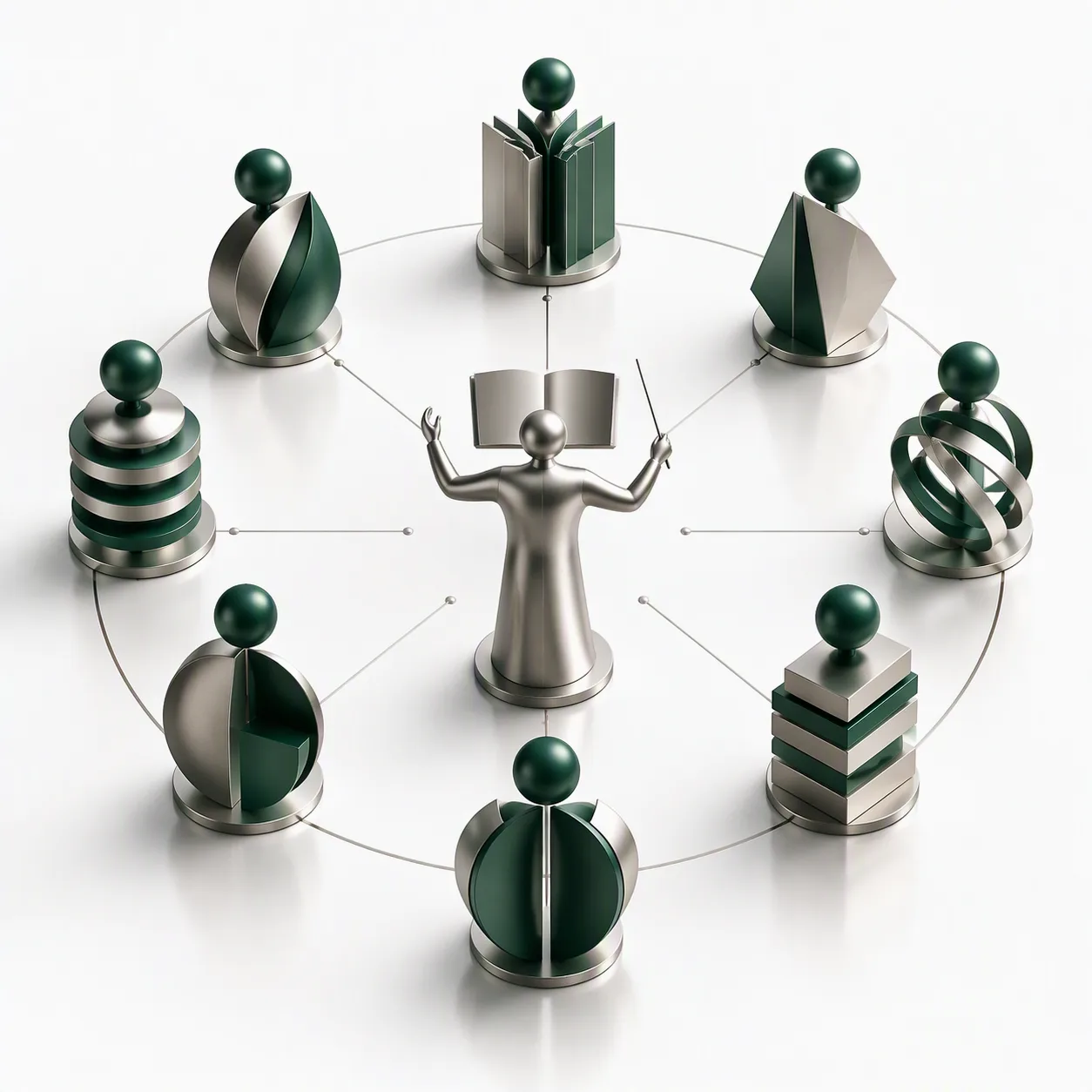
02 orchestra - governance equilibrata

IT Governance & Compliance

Structural alignment with regulations and organizational responsibilities.

Compliance cannot be sustained through documentation alone. Policies, controls, technical systems, decision rights, and operational practices must support one another.

We help organizations translate regulatory and governance expectations into structures that can be implemented, operated, evidenced, and reviewed.

The focus is not simply on passing an audit. It is on building a clear relationship between obligations, risks, controls, ownership, and day-to-day technical decisions.

Typical areas of work

  • Governance-model assessment
  • Roles, ownership, and accountability
  • Control design and implementation
  • Regulatory and policy alignment
  • Risk and control mapping
  • Audit-readiness support
  • Evidence and documentation structures
  • Decision and escalation frameworks
  • Governance for technology change

Intended outcome

A governance structure in which responsibilities are clear, controls are connected to real risks, and compliance can be demonstrated through normal operations.

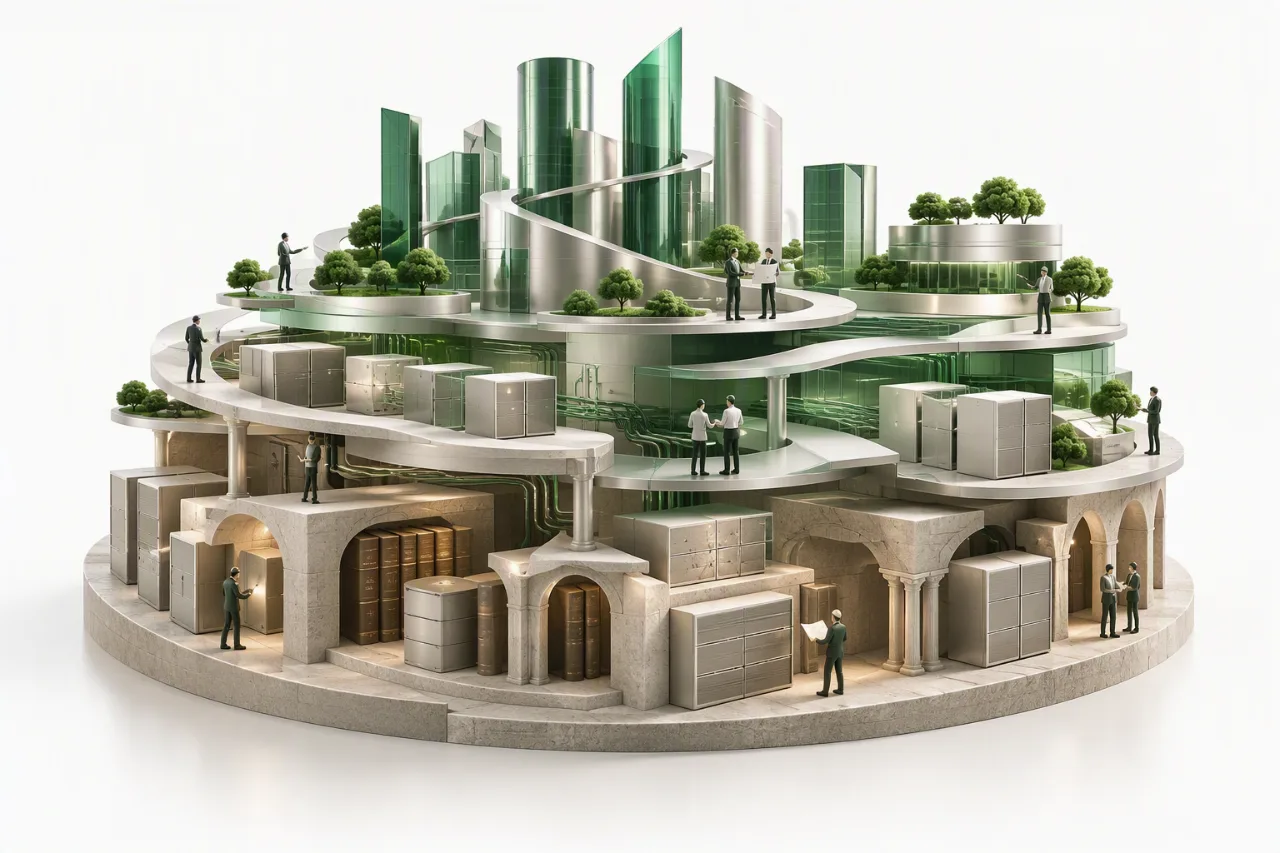
03 immagine di una città fondata su una architettura resiliente

Legacy architectures, mainframes, and sustainable modernization

Optimizing legacy systems and critical technology foundations.

Legacy and mainframe environments often support the most important services in an organization. Their value is substantial, but so are the risks created by concentrated knowledge, aging integrations, unclear dependencies, and accumulated technical decisions.

We assess these environments in the context of the wider organization rather than treating them as isolated platforms.

The objective is to improve visibility, operability, resilience, and decision-making while recognizing the constraints and business importance of systems that cannot simply be replaced.

Typical areas of work

  • Mainframe and legacy-platform assessment
  • Critical architecture review
  • Application and infrastructure dependencies
  • Integration and data-flow analysis
  • Operational concentration and knowledge risk
  • Modernization-readiness assessment
  • Transition and coexistence planning
  • Resilience and recovery design
  • Architecture decision support

Intended outcome

A practical understanding of the current architecture, its structural risks, and the safest path for optimization, modernization, or continued operation.

From isolated issues to a complete structural view.

A technical weakness may also be a governance problem. A compliance gap may originate in architecture. A resilience failure may be caused by unclear ownership rather than insufficient technology.

For this reason, SABRE Consulting evaluates services in relation to one another. The appropriate engagement may begin in one area, but recommendations account for the wider system in which the issue exists.

  1. 01Understand the architecture
  2. 02Identify structural weak point
  3. 03Define priorities
  4. 04Engineer sustainable improvements

Engagements shaped around the problem.

Not every organization needs a large transformation programme. The scope should reflect the urgency, complexity, risk, and decisions that need to be made.

Clear findings. Defensible priorities. Practical action.

The exact outputs depend on the scope of the engagement, but the work can provide decision-makers and technical teams with a shared and actionable understanding of the environment.

  • A clear view of critical systems and dependencies
  • Identification of structural causes rather than only visible symptoms
  • Prioritized technical and operational risks
  • Architecture and resilience recommendations
  • Defined ownership and governance responsibilities
  • A practical sequence for remediation or improvement
  • Evidence that supports internal governance and audit preparation
  • Greater clarity for technical and executive decision-making

Delivered through the SABRE Method.

Each service is delivered through the same structured process: identify root causes, map the environment, prioritize risk, engineer resilient improvements, and establish sustainable governance.

This ensures that recommendations are based on a complete view of the problem and can be carried forward into implementation.

Bring structure to your most critical IT challenges.

Whether the priority is resilience, compliance, legacy architecture, or risk reduction, the first step is understanding how the technical and organizational system operates as a whole.

Cookie Settings